
Cart
0
your cart

No items found.
Product is not available in this quantity.

Choosing an asphalt mixing plant is not only a question of production capacity. It is also a question of project location, construction duration, material supply, transport distance, and how often the plant needs to move. For some contractors, a stationary asphalt mixing plant provides the best long-term production solution. For others, a mobile asphalt mixing plant can reduce setup time and improve project flexibility.
So, when should a contractor choose a mobile asphalt mixing plant? The answer depends on the project rather than the plant alone. A mobile plant becomes particularly attractive when a contractor handles remote projects, short-term road contracts, multiple construction sites, or projects where moving the production point closer to the paving area can reduce logistics costs.
However, mobility does not automatically mean lower total costs. Contractors should compare the complete project economics before making a decision. This includes plant investment, transportation, installation, relocation, fuel, aggregate delivery, asphalt production, labor, and expected utilization.
This guide explains the key situations where a mobile asphalt plant for sale makes practical sense. It also shows when a stationary plant may be the better choice.
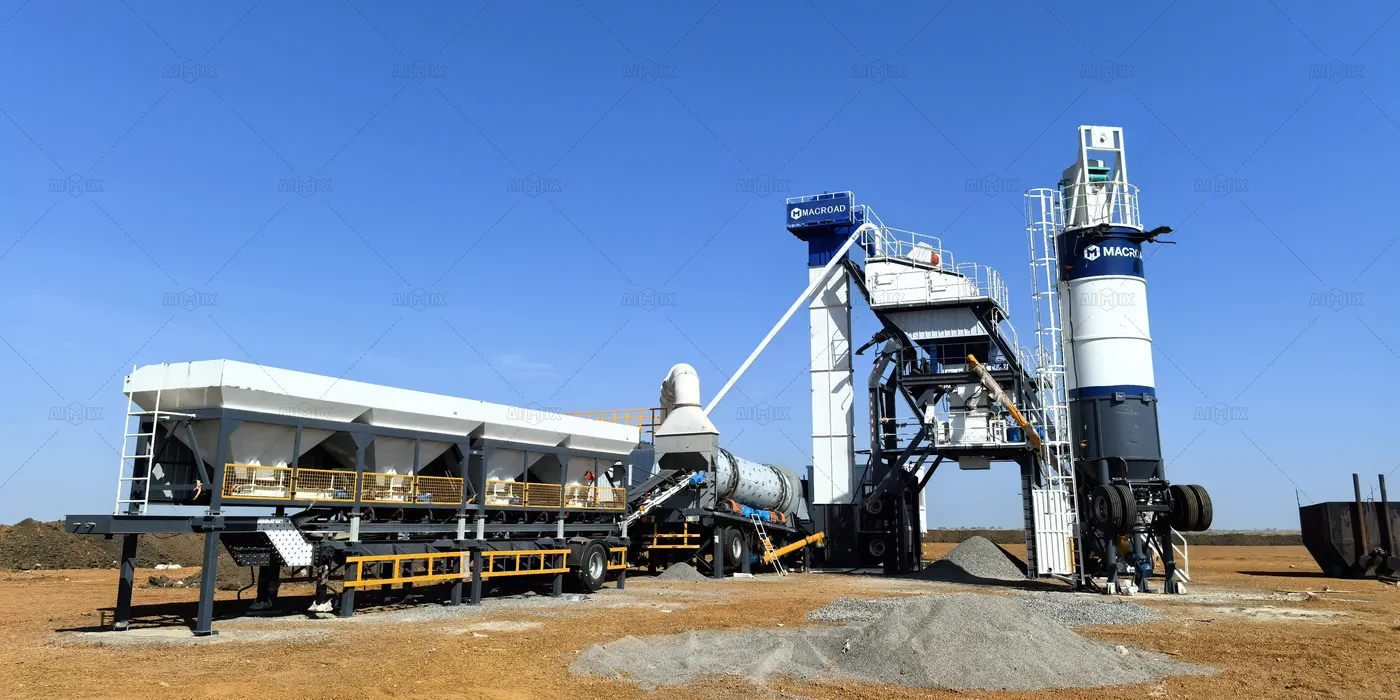
The first decision should come from the construction plan. A contractor should first understand where the asphalt will be produced, how much mix the project needs, and how long the plant will operate at that location.
Once these factors are clear, the equipment choice becomes easier. In practice, four questions usually determine whether mobility creates real value.
These questions matter because asphalt is not produced in isolation. The plant is part of a larger construction logistics system. If the plant sits too far from the paving area, truck cycles become longer. As a result, fuel consumption and transportation time can increase.
Therefore, a portable asphalt mixing plant should be evaluated as a project logistics solution, not simply as a smaller version of a stationary plant.
Several project conditions strongly favor mobile asphalt production. The following situations deserve particular attention.
Remote road projects are one of the clearest applications for mobile asphalt mixing plants. A contractor may need to build roads far from established asphalt suppliers or urban production centers.
In such cases, buying asphalt from a distant supplier can create several problems. Delivery trucks travel longer distances. Transport costs increase. Delivery schedules become harder to control. Traffic and road conditions can also affect supply reliability.
A mobile asphalt mixing plant allows the contractor to produce asphalt closer to the construction area. This can shorten the distance between production and paving.
For example, consider a road project located several hours from the nearest commercial asphalt supplier. Even if the supplier offers a competitive mix price, the contractor still needs to account for trucking time, fuel, loading, unloading, and possible delays.
Producing asphalt closer to the project can improve control over the supply chain. This becomes even more valuable when the project requires continuous paving over a large distance.
A mobile plant can also suit projects with limited construction durations. These may include road rehabilitation, highway maintenance, airport pavement work, temporary access roads, and regional infrastructure projects.
A contractor may not want to build a permanent asphalt production base for a project that lasts only several months. A stationary plant usually requires a suitable site and more permanent infrastructure.
By contrast, a mobile configuration focuses on faster deployment and easier relocation. The contractor can move the equipment after completing the project.
However, the contractor should calculate expected utilization carefully. A mobile plant makes more financial sense when the equipment can serve several projects instead of sitting idle after one contract.
Mobility becomes especially valuable when a contractor operates across different construction areas.
For example, a regional road contractor may win several highway rehabilitation contracts during the same year. The projects may not be close to each other. Transporting finished asphalt from one central plant could become inefficient.
A mobile asphalt mixing plant can move closer to each major project. This gives the contractor greater control over production locations.
More importantly, the equipment can become a reusable production asset. Instead of investing separately in a fixed plant for every region, the contractor can relocate one mobile plant according to the project pipeline.
Therefore, contractors with a strong portfolio of geographically distributed projects should consider mobility as part of their long-term equipment strategy.
Some projects move progressively along a road corridor. The paving area may change significantly during construction.
In this situation, the distance between the plant and the active paving area can gradually increase. Longer haul distances can affect truck availability and paving continuity.
A mobile plant offers another option. The contractor can relocate production when the project reaches a new section.
This approach can be useful for large road networks, mining roads, rural highways, and other linear infrastructure projects.
Remote construction sites may not offer the same infrastructure as industrial areas.
The contractor may have limited access to permanent foundations, utilities, storage areas, or established material-handling systems. In these conditions, a mobile plant with an appropriate configuration can simplify deployment.
However, “mobile” does not mean “requires no preparation.” The site still needs adequate ground conditions, access roads, aggregate storage space, fuel arrangements, power supply, and safe operating areas.
Consequently, contractors should inspect the actual site before choosing the plant configuration.
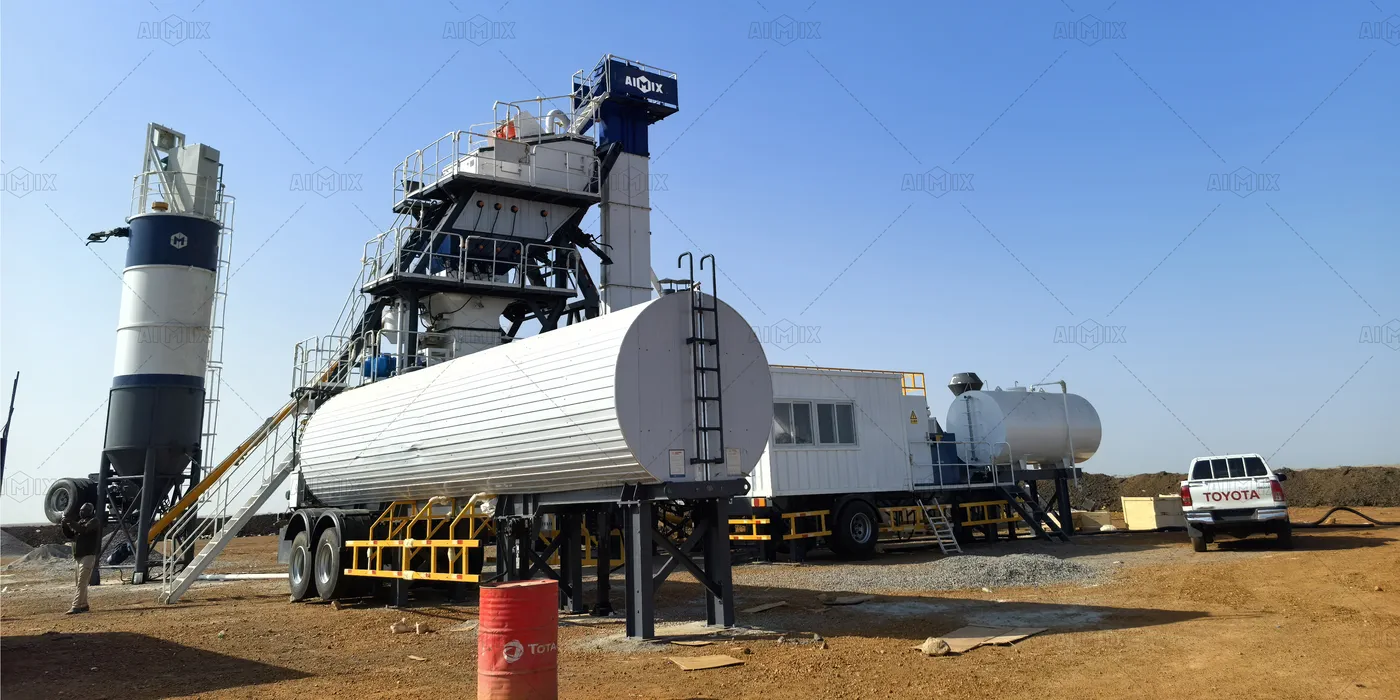
Project duration is one of the most important factors in the mobile-versus-stationary decision.
A short project may favor mobility because the contractor needs quick deployment and later relocation. A long-term project may favor a stationary plant when production remains at one location for years.
Yet duration should not be considered alone. The number of projects expected during the equipment's service life also matters.
Thus, the right question is not simply, “How many months will this project last?” Instead, ask, “How many productive hours and projects can this plant serve during its useful life?”
Mobility should never replace proper capacity planning.
A contractor must first estimate the required asphalt production rate. The calculation should consider paving speed, asphalt layer thickness, road width, working hours, truck availability, and expected daily output.
For example, a project requiring only moderate daily asphalt production does not necessarily need a very large plant. A plant with excessive capacity can increase investment and operating requirements without creating additional value.
At the same time, choosing a plant that is too small can create production bottlenecks. The paver may wait for asphalt. Trucks may queue at the plant. Daily paving targets may become difficult to achieve.
Therefore, capacity should match the real construction schedule rather than the contractor's maximum theoretical demand.
Plant capacity is often expressed in tons per hour. However, contractors should also estimate daily production.
An asphalt plant rated at 100 T/H does not automatically produce 800 tons every day. Actual output depends on working hours, aggregate moisture, mix design, loading efficiency, maintenance, truck availability, and site conditions.
For this reason, contractors should estimate realistic operating hours instead of using the nameplate capacity as guaranteed daily production.
A practical calculation can start with:
Estimated Daily Asphalt Production = Effective Production Rate × Actual Operating Hours
This simple approach provides a more realistic basis for equipment selection.
One of the strongest arguments for mobile asphalt mixing plants is logistics.
Asphalt production and asphalt paving need to stay synchronized. If the plant is too far away, trucks spend more time on the road instead of delivering material.
Long transport distances can also increase the risk of temperature loss. Asphalt mixtures must arrive in a workable condition for paving and compaction. The exact requirements depend on the mix design, weather, haul conditions, and project specifications.
Therefore, reducing haul distance can improve logistics efficiency while helping the paving crew maintain a more predictable supply.
Contractors should not compare only the price per ton of asphalt. They should compare the entire delivery cycle.
When the haul distance is long, these factors can become a significant part of project costs.
In contrast, moving the plant closer to the project may reduce the required trucking fleet. This can help the contractor maintain a steadier asphalt supply with fewer trucks.

A mobile plant is not always the best solution. Contractors should also understand when a stationary plant has a stronger business case.
A stationary asphalt mixing plant may be more suitable when the contractor has a long-term production location and consistently high demand.
If a contractor produces large quantities of asphalt from the same location for many years, permanent infrastructure can become more valuable.
A fixed plant can support larger aggregate storage systems, larger finished mix storage, more extensive material handling, and other permanent infrastructure.
It can also support a stable production workflow when relocation is not part of the business model.
Stationary production can make sense when a contractor or asphalt supplier serves many customers within a relatively concentrated market.
In this case, the plant acts as a long-term supply center. Multiple paving crews or external customers can collect asphalt from the same location.
The contractor should then focus on maximizing annual plant utilization instead of mobility.
A stationary plant needs a suitable long-term site. If the contractor already owns or leases an appropriate location, the investment case becomes stronger.
Reliable electricity, aggregate storage, fuel systems, access roads, and other infrastructure can further improve the efficiency of a fixed plant.
As a result, the decision should consider both equipment and site conditions.
Choosing a mobile hot mix asphalt plant does not remove the need for site planning. The contractor still needs to prepare the production area properly.
Aggregates require enough space for different sizes and grades. Poor material organization can affect feeding consistency and production efficiency.
The burner requires a reliable fuel supply. The contractor should confirm the available fuel type and local supply conditions before selecting the burner configuration.
The site needs a suitable power solution unless the selected plant configuration includes an appropriate independent power system.
Truck access remains important even with a mobile plant. The plant must support efficient aggregate delivery and asphalt loading.
The installation area should provide adequate stability and drainage. Site preparation requirements depend on the specific plant design and local regulations.
These factors show why contractors should evaluate mobility together with site engineering. A mobile plant simplifies relocation, but it does not eliminate construction planning.

Relocation frequency is another practical consideration.
If the plant moves once every few years, mobility may mainly provide flexibility. If it moves several times a year, transport design and installation efficiency become much more important.
The contractor should ask how the plant will travel between projects. Consider road restrictions, transport permits, dismantling requirements, lifting equipment, and setup time.
In addition, relocation costs should enter the financial model. A mobile plant only creates value when the savings and flexibility from relocation exceed the costs involved.
The purchase price is only one part of the investment decision.
A contractor should calculate the total cost of owning and operating the plant during the expected project period.
A useful framework includes:
This broader calculation can reveal whether mobility actually improves project economics.
Contractors can compare two scenarios.
Scenario A: Buy or use a stationary plant and transport asphalt to the construction site.
Scenario B: Deploy a mobile plant closer to the construction site and produce asphalt locally.
Then compare the total costs under the same production volume and project schedule.
The mobile option becomes more attractive when savings from shorter haul distances, reduced trucking requirements, improved production control, and future relocation outweigh the additional costs of mobile deployment.
This method is more reliable than choosing equipment based only on the lowest purchase price.
Mobility should not mean compromising mix quality.
A properly selected mobile asphalt mixing plant should provide the required control over aggregate heating, screening, weighing, asphalt dosing, mineral filler, mixing, and temperature management according to the plant design.
However, quality also depends on materials, mix design, calibration, operating procedures, maintenance, and quality control.
Therefore, contractors should evaluate the complete production system rather than assume that plant mobility determines asphalt quality.

After deciding that mobility fits the project, the next step is choosing the right configuration.
Start with expected daily asphalt consumption. Then consider peak production requirements and future projects.
Do not select capacity only because a larger number appears more attractive. Excess capacity can increase investment without improving project returns.
Different projects use different aggregate gradations and asphalt mix designs. The cold aggregate feeding and screening system should match the required material fractions.
If the contractor expects several mix types, configuration flexibility becomes more important.
Fuel availability can vary significantly between countries and remote regions. Contractors should select a burner configuration that fits local fuel supply and operating conditions.
Environmental requirements should form part of the initial plant selection. Dust collection performance, emissions control, and local regulations can affect the required configuration.
A mobile plant often serves more than one project. Therefore, contractors should avoid choosing a configuration that fits only the first contract.
Consider the likely project types over the next several years. A slightly more flexible configuration may provide better long-term value if the contractor expects different road projects or operating locations.
Before placing an order, contractors can review the following questions.
If most answers point toward flexibility and relocation, a mobile asphalt mixing plant deserves serious consideration.
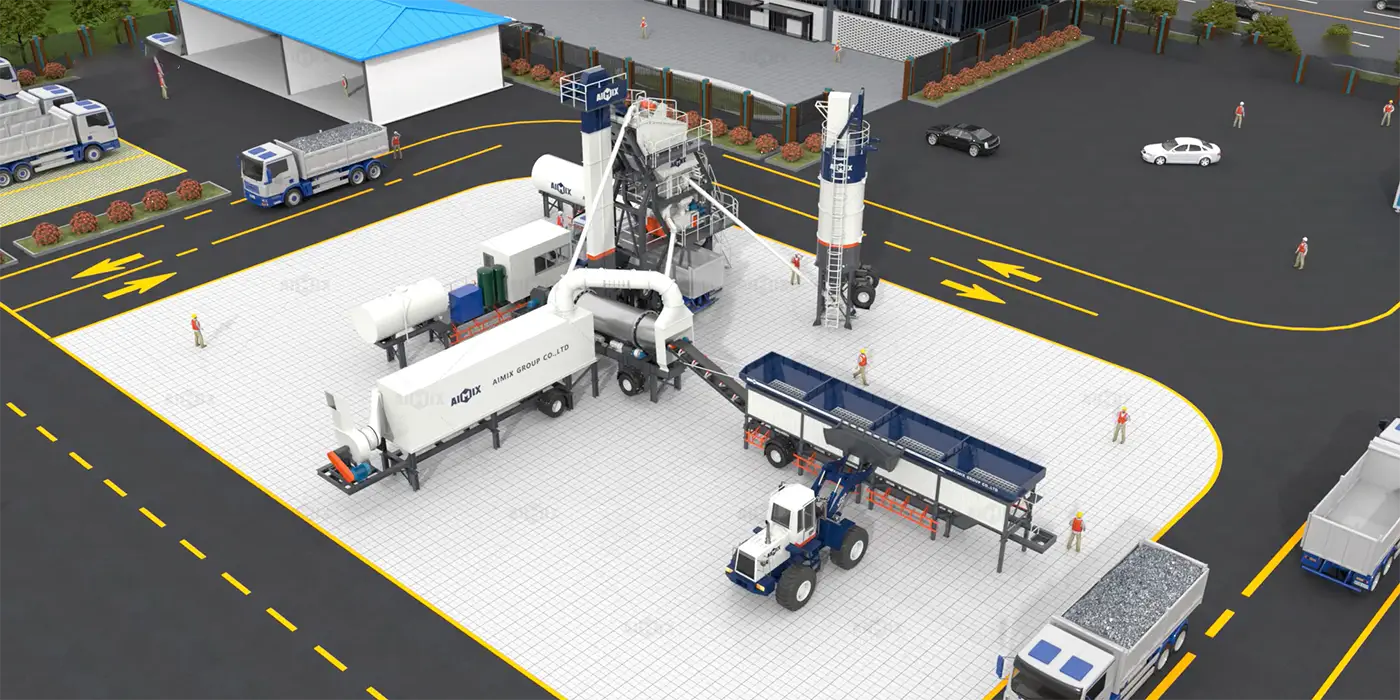
Even experienced contractors can make equipment decisions too quickly. Several mistakes appear repeatedly.
The cheapest plant is not necessarily the lowest-cost solution. Transport, fuel, maintenance, installation, and utilization can have a larger impact over the project life.
Contractors sometimes focus on the asphalt production cost but overlook the cost of delivering the mix to the paver.
For remote projects, this can significantly distort the comparison.
A plant may have a high theoretical capacity, but actual output depends on operating conditions. Use realistic production assumptions when calculating project economics.
Mobile equipment still requires planning for transport and setup. Contractors should understand the actual relocation process before assuming that moving the plant will be effortless.
A mobile plant becomes more valuable when it can generate revenue across several projects. Therefore, the contractor should evaluate the future project pipeline, not just the current contract.
A contractor should strongly consider a mobile asphalt mixing plant when project locations change, construction sites are remote, asphalt haul distances are long, project durations are limited, or the contractor needs one production system for multiple projects.
It is particularly attractive when moving asphalt production closer to the paving area can reduce logistics complexity and improve supply control.
On the other hand, a stationary asphalt mixing plant may provide better long-term value when production remains at one location, demand stays high, and the contractor can build a stable customer base around a permanent plant.
In other words, mobility should solve a real construction problem. It should not be selected simply because the equipment is easier to move.
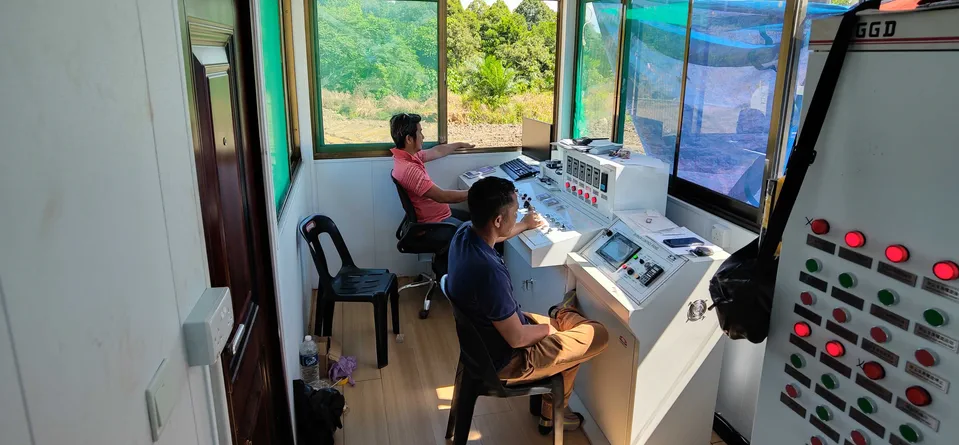
The best asphalt mixing plant is the one that fits the contractor's actual production model.
Before investing, compare the project location, daily asphalt demand, haul distance, construction schedule, expected utilization, relocation frequency, fuel availability, and long-term project pipeline. These factors provide a much stronger basis for equipment selection than plant price alone.
If your projects frequently move between regions or involve remote road construction, a mobile asphalt mixing plant may give you the flexibility needed to control production and logistics. If your operation requires continuous high-volume production from one fixed location, a stationary configuration may be more appropriate.
Need help comparing mobile and stationary asphalt mixing plant options for your project? Share your required capacity, project location, expected asphalt demand, project duration, and number of future sites. A professional equipment supplier can then help you evaluate the suitable plant configuration, logistics requirements, and total project economics before you invest.

